

Buy relays and switching technology for solar and onboard power systems

Shipped in 1-3 Days (Mo-Fri)
Shipped in 1-3 Days (Mo-Fri)

Shipped in 1-3 Days (Mo-Fri)
Shipped in 1-3 Days (Mo-Fri)
Shipped in 1-3 Days (Mo-Fri)
Shipped in 1-3 Days (Mo-Fri)

Shipped in 1-3 Days (Mo-Fri)
Shipped in 1-3 Days (Mo-Fri)

Shipped in 1-3 Days (Mo-Fri)
Shipped in 1-3 Days (Mo-Fri)

Shipped in 1-3 Days (Mo-Fri)
Shipped in 1-3 Days (Mo-Fri)

Shipped in 1-3 Days (Mo-Fri)
Shipped in 1-3 Days (Mo-Fri)

In this category, you’ll find relays and switching technology for a wide variety of applications in your solar or onboard power system: from automatic battery disconnection and grid priority switching to voltage and frequency monitoring. All products are from established manufacturers such as Votronic, Victron Energy, and Growatt.
Battery Isolation Relays
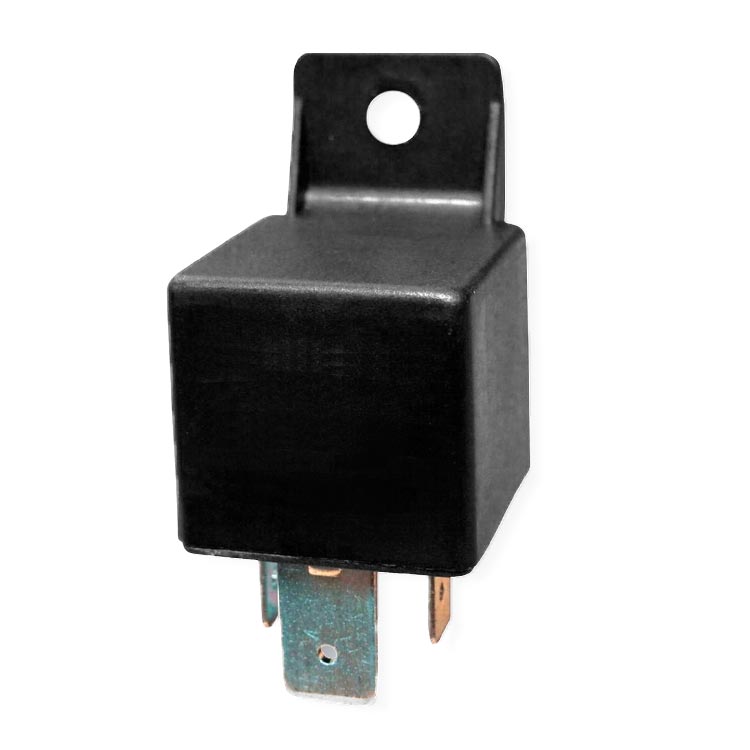
A battery isolation relay automatically connects and disconnects two battery circuits without requiring any manual intervention. For example, the Votronic 2200 battery isolation relay disconnects the starter battery from the onboard battery after the engine is shut off and automatically reconnects them the next time the engine is started. For higher currents, the Votronic 2203 high-performance isolating relay, rated at 140 to 200A, is available. The Votronic 2202 transfer relay is specifically designed for connecting a VBCS Triple battery charger to an existing Schaudt electrical block. A manual battery isolator, on the other hand, is the right choice if you want to interrupt the circuit manually.
Switching Stations for Grid Priority Circuit
A transfer station allows you to switch 230V loads seamlessly between two different voltage sources, such as between shore power and an inverter. The Offgridtec US-16 transfer station handles up to 3,600W, while the more compact US-12 handles up to 2,700W.
Transfer switches for grid-tied and off-grid operation
The Growatt ATS-S transfer switch controls the change of power source in single-phase mode, regardless of whether your system is currently connected to the grid or operating in off-grid mode. If you need a three-phase solution, you’ll find the right Growatt ATS-T transfer switch in our switches category.
Voltage and Frequency Relays for Professional Applications
The Victron (Ziehl) UFR1001E is a grid disconnection relay that monitors voltage and frequency in three-phase and alternating current grids and automatically disconnects the system in case of deviations—particularly relevant for larger PV systems that feed into the grid.
-
What is an isolation relay and what is it used for?
An isolation relay automatically connects or disconnects two electrical circuits, such as the service battery and the starter battery. It switches on its own without requiring manual intervention.
-
What is the difference between an isolating relay and a battery disconnect switch?
An isolating relay switches automatically, for example, depending on whether the engine is running. A battery disconnect switch, on the other hand, is operated manually using your hand or a key.
-
How does a transfer switch for mains priority operation work?
It detects which of the two connected power sources is currently available and automatically and seamlessly switches your 230V loads to that source.
-
What is an automatic transfer switch (ATS) used for?
An automatic transfer switch handles the automatic switch between grid connection and off-grid operation, such as in a backup system for emergency power.
-
What does a voltage and frequency relay do?
It continuously monitors the voltage and frequency in the grid and automatically disconnects the system as soon as values fall outside the permissible range—which is important for the safe operation of grid-connected systems.
-
What current rating should I look for in the relay?
The current-carrying capacity must be at least equal to the maximum current of your load. Be sure to allow for some margin here so that the relay isn’t constantly operating at its load limit.
-
Can relays be retrofitted or installed by yourself?
Yes, most relays can be retrofitted with basic DIY knowledge. For higher currents or grid connection, we recommend having the installation checked by a licensed electrician.