

Balcony Power Plants as Complete Kits – Your Own Solar Power for Balcony, Garden and Terrace

Shipped in 4-8 Days (Mo-Fri)
Shipped in 4-8 Days (Mo-Fri)

Shipped in 4-8 Days (Mo-Fri)
Shipped in 4-8 Days (Mo-Fri)

Shipped in 3-6 Days (Mo-Fri)
Shipped in 3-6 Days (Mo-Fri)

Shipped in 10-14 Werktage (Mo-Fr)
Shipped in 10-14 Werktage (Mo-Fr)

Shipped in 4-8 Days (Mo-Fri)
Shipped in 4-8 Days (Mo-Fri)

Shipped in 4-8 Days (Mo-Fri)
Shipped in 4-8 Days (Mo-Fri)

Shipped in 2-5 Days (Mo-Fri)
Shipped in 2-5 Days (Mo-Fri)

Product is expected to be back in stock on 9 November 2026
Product is expected to be back in stock on 9 November 2026
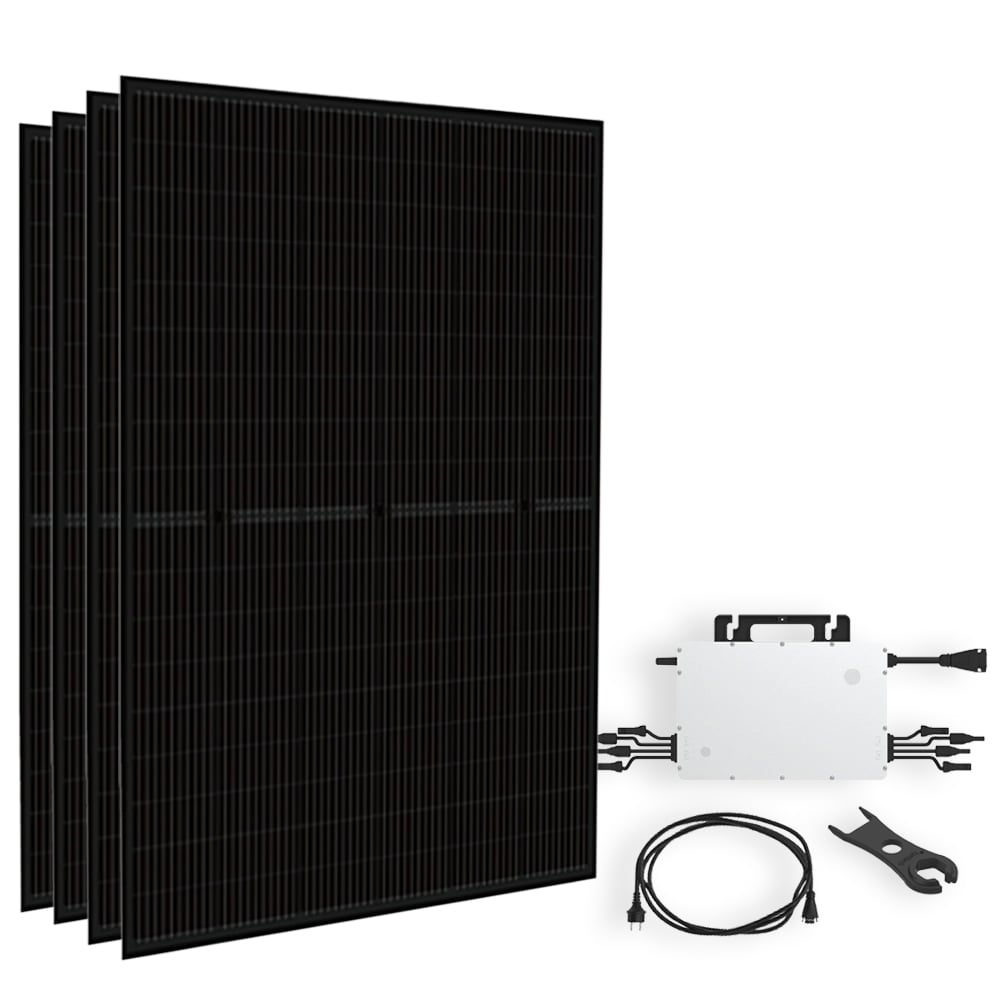
Product is expected to be back in stock on 1 January 2027
Product is expected to be back in stock on 1 January 2027

Product is expected to be back in stock on 1 January 2027
Product is expected to be back in stock on 1 January 2027

Product is expected to be back in stock on 1 January 2027
Product is expected to be back in stock on 1 January 2027

Product is expected to be back in stock on 6 November 2026
Product is expected to be back in stock on 6 November 2026

Product is expected to be back in stock on 6 November 2026
Product is expected to be back in stock on 6 November 2026

What is a balcony power plant?
A balcony power plant is a small solar system that you plug directly into a standard household outlet. Unlike a traditional rooftop system, you don’t need your own roof—a balcony, patio, garden, or carport will suffice.
How balcony power plants work
Solar energy is converted by the solar panels into direct current (DC) and then by the inverter into alternating current (AC). This electricity is fed into your home’s electrical system via a standard household outlet. All connected devices prioritize using your own solar power—only when that isn’t enough do you draw power from the public grid.
Comparing balcony power systems: with or without storage
Without storage, you can only use your solar power while the sun is shining. Any power you don’t consume at that moment flows into the public grid—usually without compensation. With storage, you capture this surplus during the day and use it in the evening or at night—this significantly increases your self-consumption rate, though it requires a correspondingly higher initial investment.
Balcony Solar System with Storage: Who Benefits?
A balcony power plant with storage is especially worthwhile if you’re rarely home during the day and mainly need your electricity in the morning, evening, or at night—for example, for your refrigerator, router, lighting, or TV. Without storage, a large portion of your solar power would then flow unused into the grid.
If you’re home a lot during the day or if appliances like the washing machine and dishwasher usually run around lunchtime, you’ll already be using a significant portion of your solar power directly, even without storage. In that case, a balcony power plant without storage is often the more economical choice.
When choosing the size, make sure the storage system matches your panel output and your evening consumption: A storage system that’s too large won’t fill up on many days, while one that’s too small will be full by the afternoon, and the rest will feed back into the grid.
What’s allowed for balcony solar systems with storage
Even with a storage system, the limits for balcony solar power systems still apply: a maximum feed-in capacity of 800 watts via the inverter and up to 2,000 watts peak module output. The storage system does not remove the 800-watt limit—but it does ensure that more of your solar power stays with you. Especially with a module output exceeding 800 watts peak, a storage system allows you to use the surplus at midday instead of letting it go to waste.
Registration in 2026: What You Need to Know
Balcony power plants with an inverter capacity of up to 800 watts and a module power of up to 2,000 watts peak do not require a permit. Since the Solar Package I, registration with the grid operator is no longer necessary—you register your system once, free of charge, in the Federal Network Agency’s market master data registry; the grid operator is automatically notified. If you have a storage system, you must also enter it there as a separate unit.
How much does a balcony power plant cost?
You can get complete systems from us starting at €300. With an average investment of around €1,000, a balcony power plant usually pays for itself within about five years—depending on your consumption and the orientation of the modules.
A balcony power plant with a storage system costs significantly more, depending on the storage capacity. Whether the extra cost is worth it depends primarily on how much solar power you would otherwise feed into the grid unused—the larger this share, the sooner the storage system pays for itself.
Your benefits at a glance
- No need for your own roof—a balcony, patio, or garden is enough
- No permit required for inverter capacities up to 800 W
- Payback period usually within a few years
- Expandable with storage for higher self-consumption
Are you specifically looking for a complete system from our own brand? Then check out our Offgridtec balcony power plants.
Frequently Asked Questions About Balcony Power Plants
What are the real benefits of a balcony power plant?
You generate part of your electricity needs yourself, thereby lowering your electricity costs and becoming less dependent on your energy provider. How much you save depends primarily on how much solar power you consume directly yourself.
How do I register a balcony power plant in 2026?
You register your balcony power plant once in the Market Master Data Registry. A separate registration with the grid operator is no longer necessary, as long as your system stays within the limits of an 800 W inverter and 2,000 Wp module output. You’ll also need to enter any storage system there.
Does a balcony solar power system with storage make sense?
A balcony solar power system with storage makes sense if you use a large portion of your electricity in the evening or at night. The storage system captures the surplus generated during the day, allowing you to use more of your solar power yourself. If you use a lot of electricity during the day anyway, a balcony solar power system without storage is often sufficient.
What is the maximum output allowed for a balcony solar power system with storage?
The solar modules may have a combined output of up to 2,000 watts peak, but no more than 800 watts may be fed into the grid—a storage unit does not change this limit. However, the storage unit helps you utilize the surplus generated by a higher module output.
How do the different balcony solar power systems in your store differ?
Our balcony solar power systems differ primarily in power output, the number of solar panels, and whether they include a storage unit. This way, you can find the right solution based on your balcony size and energy consumption.
How does a balcony power plant feed electricity into the grid?
The photovoltaic modules generate electricity, which is fed to an inverter. The inverter is connected to the home’s electrical system via a cable and feeds the electricity into it.
When is a balcony power plant worth it?
The more solar power you use yourself, the more worthwhile a balcony power plant becomes. With an average initial investment of around €1,000, it usually pays for itself in about five years.
Any questions? Call us at 08721 91994-00 or send us an email at info@offgridtec.com —our team of experts will be happy to help!